
Wall Waterproofing Services Malaysia: Complete Guide to Leaking Wall Repair, Damp Wall Treatment, Waterproofing Systems & Costs
Water penetration through walls is a common building maintenance problem in Malaysia. From damp bedroom walls and peeling exterior paint to basement seepage and cracked concrete walls, moisture can damage finishes, reduce indoor comfort and contribute to the deterioration of building materials.
When these problems persist, professional wall waterproofing services may be needed to identify the cause and provide a suitable repair solution.
However, not every damp wall is caused by failed waterproofing. Moisture may enter through external cracks, defective window joints, damaged roof connections, leaking plumbing, condensation or moisture rising from the ground.
Applying waterproof paint without identifying the source may hide the symptoms temporarily while the underlying problem continues.
Effective wall waterproofing begins with a proper inspection, followed by selecting materials and repair methods that match the wall construction and moisture conditions.
This guide explains the causes of wall leakage, common waterproofing systems, professional repair methods, installation procedures, cost factors and how to choose a suitable waterproofing contractor in Malaysia.
What Are Wall Waterproofing Services?
Wall waterproofing services involve preventing or controlling unwanted water penetration through external walls, internal wet-area walls, concrete walls and below-ground structures.
Depending on the condition of the building, the work may include:
- Exterior wall waterproofing
- Internal wall moisture treatment
- Concrete wall crack sealing
- Wall leakage inspection
- Waterproof coating application
- Cementitious waterproofing
- Polyurethane waterproofing
- Waterproofing membrane installation
- PU injection grouting
- Basement wall waterproofing
- Retaining wall waterproofing
- Window perimeter sealing
- Wall plaster and concrete repair
- Protective coating and painting
The appropriate method depends on where the moisture originates and how it enters the building.
Waterproofing vs Damp-Proofing
Waterproofing is intended to resist water penetration under specified exposure conditions.
Damp-proofing is generally intended to control moisture migration where significant water pressure is not present.
A below-ground wall exposed to hydrostatic pressure may require a different system from an above-ground wall affected by wind-driven rain.
Why Wall Waterproofing Is Important in Malaysia
Frequent Rainfall
External walls are regularly exposed to rain, especially walls facing prevailing winds.
Defective cracks, joints and openings can allow water to penetrate.
High Humidity
Humidity can slow drying and contribute to persistent damp conditions.
However, high humidity alone does not prove that a wall has a waterproofing defect.
Concrete and Plaster Cracks
Cracks may develop because of shrinkage, temperature changes, settlement or structural movement.
Some cracks provide pathways for rainwater.
Ageing Sealants
Sealants around windows, doors and construction joints may deteriorate over time.
Plumbing Problems
Concealed water pipes and bathroom plumbing can cause dampness in adjacent walls.
Underground Water Pressure
Basement and retaining walls may experience seepage through cracks and joints.
Common Signs of Wall Water Leakage
Damp Patches
Darkened or persistently damp wall areas may indicate moisture penetration.
Peeling Paint
Moisture beneath paint can cause blistering, peeling and coating failure.
White Powdery Deposits
Efflorescence occurs when moisture transports soluble salts to a masonry or concrete surface.
Mould Growth
Persistent dampness can encourage mould growth, especially in poorly ventilated areas.
Cracked Plaster
Cracks may allow water entry, although not every plaster crack indicates leakage.
Musty Odours
A persistent musty smell may indicate hidden moisture.
Water Stains After Rain
Moisture that appears mainly during rainfall may suggest defects in external walls, windows or roof junctions.
Common Causes of Wall Leakage
1. External Wall Cracks
Rainwater may enter through cracks in render, masonry or concrete.
The appropriate repair depends on whether the crack is stable or moving.
2. Defective Window and Door Joints
Poorly sealed frames and openings can allow water to penetrate surrounding walls.
3. Failed Exterior Coatings
Deteriorated coatings may no longer provide the intended weather protection.
4. Roof and Parapet Junction Defects
Water may enter near roof edges and travel into the wall below.
5. Leaking Plumbing
Concealed pipe defects can produce damp patches even when it is not raining.
6. Rising Damp
Moisture may migrate upward through porous materials where suitable moisture barriers are absent or ineffective.
A proper diagnosis is important because rising damp requires a different treatment strategy from rain penetration.
7. Condensation
Warm, humid air can condense on sufficiently cool surfaces.
Condensation is not normally solved by applying an exterior waterproofing membrane.
8. Basement Water Pressure
Below-ground walls may experience water penetration through cracks, construction joints and defects in the external waterproofing system.
Types of Wall Waterproofing Systems
1. Cementitious Wall Waterproofing
Cementitious waterproofing uses cement-based materials to form a protective layer on compatible concrete or masonry surfaces.
It may be suitable for selected internal wet areas and below-ground applications.
Flexible and rigid formulations have different performance characteristics.
2. Polyurethane Waterproofing Coating
Polyurethane coatings can form a continuous protective membrane after curing.
Suitable formulations may be used for selected wall applications.
The product must be compatible with vertical installation, substrate conditions and environmental exposure.
3. Elastomeric Exterior Wall Coating
Elastomeric coatings are designed to provide flexible weather protection for suitable external wall surfaces.
Some products can bridge limited surface movement, subject to their specifications.
They should not automatically be used to treat serious structural cracks.
4. Waterproofing Membrane
Sheet or liquid-applied membranes can be used on certain wall systems, including below-ground structures.
Correct detailing around joints, penetrations and terminations is essential.
5. PU Injection Waterproofing
Polyurethane injection can help seal selected water-bearing cracks and joints in concrete walls.
It is particularly relevant to certain basement and retaining wall leakage problems.
6. Crack Sealants
Compatible sealants may be used for specific movement joints and cracks.
Their suitability depends on joint design, movement and exposure.
Wall Waterproofing Systems Comparison
| System | Typical application | Main consideration |
|---|---|---|
| Cementitious waterproofing | Wet areas and selected concrete walls | Substrate compatibility and flexibility |
| Polyurethane coating | Selected concrete and wall surfaces | UV, movement and application conditions |
| Elastomeric wall coating | Exterior walls | Weather resistance and crack-bridging limits |
| Waterproofing membrane | Below-ground and selected wall systems | Joint and termination detailing |
| PU injection | Leaking concrete cracks and joints | Resin selection and injection technique |
| Joint sealant | Window joints and movement joints | Correct joint preparation and movement capacity |
No single system is suitable for every wall leakage problem.
Exterior Wall Waterproofing Services
External walls are exposed to rain, sunlight and temperature changes.
Professional exterior wall waterproofing may involve:
- Inspecting cracks and damaged finishes.
- Checking window and door perimeter seals.
- Identifying defective roof-to-wall junctions.
- Removing loose coatings and render.
- Repairing suitable cracks and damaged substrates.
- Applying a compatible exterior protective system.
- Inspecting completed details.
Is Waterproof Paint Enough for Exterior Walls?
Waterproof or weather-resistant paint may be suitable for certain external surfaces.
However, it cannot reliably compensate for major cracks, defective construction joints or uncontrolled water entry from roofs and windows.
The underlying defect should be corrected before repainting.
Interior Wall Waterproofing and Damp Wall Treatment
Interior dampness requires careful diagnosis.
For example, a damp bedroom wall may result from rain penetration through the external wall, a leaking concealed pipe or condensation.
These problems require different solutions.
When the Cause Is External Rain Penetration
The preferred approach is generally to address the entry point on the external side where practical.
When the Cause Is Plumbing Leakage
The plumbing defect must be repaired before the wall is dried and reinstated.
When the Cause Is Condensation
Ventilation, humidity control and thermal conditions may need improvement.
When the Cause Is Rising Damp
The wall may require a moisture-control strategy appropriate to the construction, rather than ordinary waterproof paint.
Why Painting Over a Damp Wall Often Fails
Applying paint before resolving the moisture source can trap moisture or lead to recurring blistering and peeling.
The wall should be assessed and allowed to dry as appropriate before finishes are restored.
Basement Wall Waterproofing
Basement walls may be exposed to groundwater and hydrostatic pressure.
Potential waterproofing solutions include:
- External waterproofing membranes
- Suitable cementitious systems
- PU injection for selected leaking cracks
- Construction joint sealing
- Drainage improvements
- Concrete repair
The repair design should consider water pressure, structural movement and access to the affected side.
Retaining Wall Waterproofing
Retaining walls may experience moisture penetration through cracks and joints.
Waterproofing can be part of the solution, but drainage is also important.
A blocked or inadequate drainage system can increase water pressure behind the wall.
Significant cracking, movement or leaning requires assessment by a qualified structural engineer.
Professional Wall Waterproofing Process
Step 1: Site Inspection
The contractor examines damp areas, cracks, joints, openings and nearby building elements.
Step 2: Moisture Source Identification
The likely cause is investigated before selecting a repair method.
Step 3: Substrate Assessment
The wall surface is checked for loose plaster, damaged concrete, existing coatings and moisture conditions.
Step 4: Repair Specification
The contractor selects suitable materials and defines the repair scope.
Step 5: Surface Preparation
Unsound material, contamination and unsuitable coatings are removed.
Step 6: Crack and Joint Treatment
Cracks, penetrations and joints receive appropriate repair or sealing.
Step 7: Waterproofing Application
The selected waterproofing coating, membrane or injection system is installed according to the manufacturer’s requirements.
Step 8: Curing and Inspection
The repair is allowed to cure, and the completed work is inspected.
Step 9: Finishing and Reinstatement
Plaster, paint or other finishes are restored where included in the project scope.
Wall Waterproofing Price Malaysia
The cost of wall waterproofing depends on the source of leakage, repair method, surface condition and accessibility.
| Cost factor | Effect on quotation |
|---|---|
| Wall area | Affects coating or membrane quantities |
| Leakage cause | Plumbing, rain penetration and groundwater require different work |
| Crack severity | May require sealing, injection or engineering assessment |
| Surface condition | Loose plaster and damaged concrete need repair |
| Waterproofing system | Materials differ in cost and application |
| Building height | Scaffolding or access equipment may be required |
| Window and joint repairs | Additional detailing may be necessary |
| Finishing work | Replastering and repainting affect total cost |
| Testing | Depends on the project requirements |
How Much Does Wall Waterproofing Cost Per Square Foot?
Some contractors quote wall coating work by area.
However, the cost of repairing a leaking wall may include more than applying waterproofing material.
For example, a high-rise external wall with damaged joints may require access equipment and specialised sealing work, while an internal wall affected by a leaking pipe may require plumbing repair and reinstatement.
A site-specific quotation is the most reliable way to compare the actual scope of work.
How to Choose a Wall Waterproofing Contractor
Look for Relevant Experience
Choose a contractor familiar with the particular wall construction and leakage problem.
Request Proper Diagnosis
The contractor should distinguish between rain penetration, plumbing leakage, rising damp and condensation.
Review Proposed Materials
Ask whether the waterproofing system is suitable for vertical surfaces and the expected exposure.
Confirm Surface Preparation
Poor preparation can affect coating adhesion and repair performance.
Check the Work Scope
Ensure the quotation includes necessary crack treatment, joint sealing and finishing.
Review Safety Arrangements
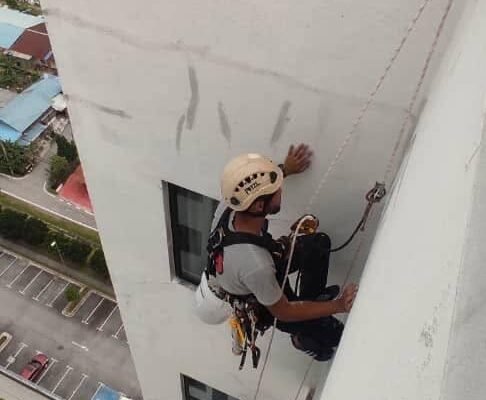
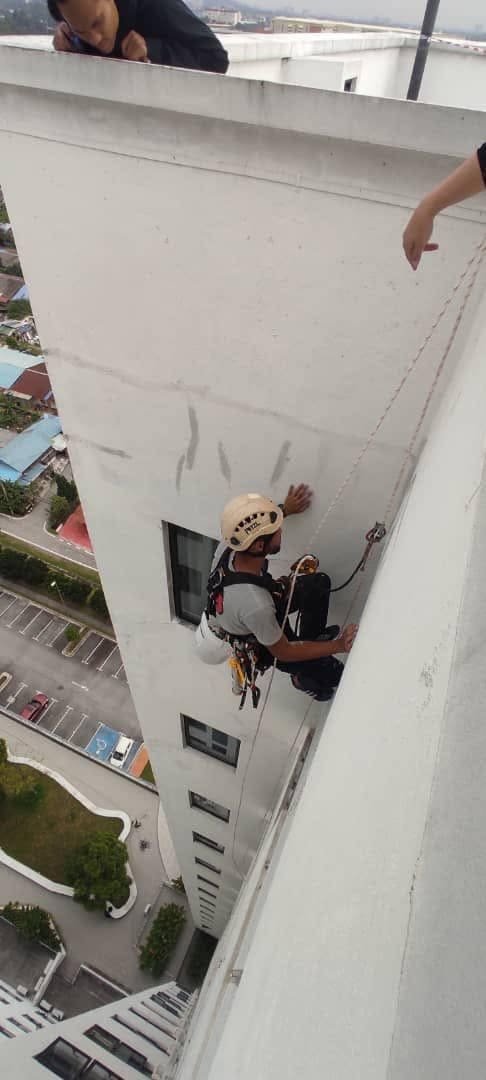
External wall work at height requires suitable access and safety procedures.
Understand Warranty Terms
If a warranty is offered, review its duration, coverage and exclusions.
Wall Waterproofing Services in Selangor and Kuala Lumpur
Wall leakage problems can affect houses, apartments, condominiums, offices, factories and commercial buildings throughout the Klang Valley.
Relevant areas include:
- Kuala Lumpur
- Shah Alam
- Klang
- Petaling Jaya
- Subang Jaya
- Puchong
- Seri Kembangan
- Kajang
- Bangi
- Rawang
The type of property and source of leakage determine the appropriate waterproofing method.
Contractor availability should be confirmed for the specific project location.
Bumi Bina – Wall Waterproofing Services Malaysia
Bumi Bina Resources (M) Sdn. Bhd. is a Malaysian construction and waterproofing company based in Seri Kembangan, Selangor.
The company’s service categories include waterproofing systems, PU injection and grouting, concrete repair, protective coatings and building maintenance.
These services are relevant to different types of wall leakage and building deterioration.
Wall Waterproofing Solutions to Enquire About
Property owners, building managers and commercial facility operators can contact Bumi Bina to discuss:
- External wall leakage repair
- Concrete wall waterproofing
- Basement wall seepage
- Retaining wall waterproofing
- PU injection for suitable leaking concrete cracks
- Concrete crack and surface repair
- Waterproofing coatings and membranes
- Related building maintenance
The most appropriate solution depends on the cause of the moisture problem, the wall construction and site conditions.
Why Proper Leakage Diagnosis Matters
A wall that becomes damp during heavy rain may have a different problem from a wall that remains wet throughout dry weather.
For example, water entering through a damaged window seal may travel behind plaster before becoming visible inside a room.
Similarly, a basement wall may experience water pressure from the surrounding ground.
Treating both situations with the same waterproof paint would not address their different causes.
A suitable inspection helps determine whether the work requires crack sealing, joint repair, membrane installation, Polyurethane Injection Waterproofing or another approach.
Contact Bumi Bina
Company: Bumi Bina Resources (M) Sdn. Bhd.
Address: 23-1, Jalan PUJ 3/9, Taman Puncak Jalil, 43300 Seri Kembangan, Selangor, Malaysia.
Phone: 012-684 6079 (En. Suhaimi)
Website: https://bumibina.com
Need help with a leaking or damp wall? Contact Bumi Bina to discuss the symptoms, affected area and available waterproofing repair options.
Common Wall Waterproofing Mistakes to Avoid
Applying Waterproof Paint Without Fixing the Leak
A coating may fail if water continues to enter through cracks, plumbing or defective joints.
Ignoring Window and Door Seals
Poorly sealed openings can allow rainwater to enter the surrounding wall.
Treating Condensation as External Leakage
Condensation problems often require moisture and ventilation management rather than additional waterproofing.
Covering Structural Cracks
Large, widening or unusual cracks may indicate structural movement.
A qualified structural engineer should assess suspected structural defects.
Using Incompatible Materials
Some waterproofing products are unsuitable for damp substrates, exposed walls or particular types of existing paint.
Poor Surface Preparation
Loose paint, weak plaster and contamination can prevent proper adhesion.
Ignoring Drainage Problems
Waterproofing repairs may be ineffective if roof drainage or below-ground drainage defects remain unresolved.
Wall Waterproofing Maintenance Tips
Regular maintenance can help reduce water penetration and identify developing problems.
- Inspect external wall cracks periodically.
- Check window and door perimeter sealants.
- Keep roof gutters and drains clear.
- Repair plumbing leaks promptly.
- Monitor recurring damp patches.
- Maintain exterior protective coatings.
- Inspect construction joints.
- Address damaged plaster and concrete.
- Improve ventilation where condensation is a problem.
- Seek professional assessment when moisture persists.
FAQ: Wall Waterproofing Services Malaysia
- 1. What are wall waterproofing services?Wall waterproofing services involve inspecting, repairing and protecting walls against unwanted water penetration using suitable coatings, membranes, sealants or injection systems.
- 2. How much does wall waterproofing cost in Malaysia?Costs depend on wall size, leakage cause, material selection, accessibility, surface condition and repair scope. A site inspection is recommended.
- 3. What is the best waterproofing material for exterior walls?Suitable elastomeric coatings, cementitious systems or other specified waterproofing materials may be used depending on the wall construction and exposure.
- 4. Can waterproof paint stop wall leakage?Waterproof paint may help protect suitable surfaces, but it cannot reliably resolve major cracks, plumbing leaks or defective construction joints.
- 5. Why is my wall damp even when it is not raining?Possible causes include plumbing leakage, condensation, rising damp or moisture retained within building materials.
- 6. Can PU injection repair a leaking concrete wall?Yes, suitable polyurethane injection systems can seal certain water-bearing cracks and joints. They do not automatically restore structural strength.
- 7. Is internal wall waterproofing better than external waterproofing?The preferred method depends on the moisture source. Where practical, controlling water entry at its source is generally preferable to simply covering the interior symptoms.
- 8. How long does wall waterproofing take?The duration depends on the repair area, preparation, material application, curing and finishing requirements.
- 9. Can waterproofing stop mould growth?Resolving water penetration can help reduce moisture conditions that encourage mould. Existing mould and other humidity sources may also require treatment.
- 10. Does Bumi Bina provide wall waterproofing-related services?Bumi Bina lists waterproofing systems, PU injection, concrete repair and related building maintenance services. Contact the company to confirm the appropriate scope for your project.
Conclusion
Professional wall waterproofing services play an important role in protecting residential, commercial and industrial buildings from moisture penetration.
Whether the problem involves rainwater entering through external cracks, basement seepage, defective window joints or damaged waterproofing, the first step is to identify the actual cause.
Cementitious waterproofing, polyurethane coatings, waterproofing membrane, joint sealants and PU injection each have different applications.
The correct repair method should consider the wall construction, moisture conditions, structural integrity and environmental exposure.
For property owners in Selangor, Kuala Lumpur and other parts of Malaysia, timely inspection and suitable repairs can help prevent further deterioration and reduce recurring maintenance problems.
Looking for wall waterproofing services in Malaysia? Contact Bumi Bina at 012-684 6079 to discuss your wall leakage problem and suitable repair solutions.
Call Us Now..Your
Wall waterproofing services Specialist Contractor in Malaysia 012–6846079 (Dato Suhaimi)
