
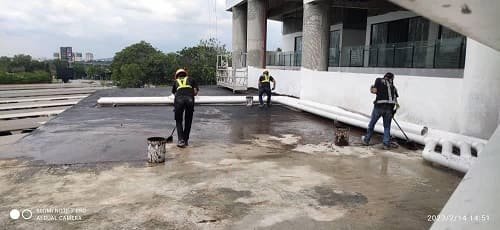
Building Repair Specialist Malaysia: Complete Guide to Building Restoration, Concrete Repair, Waterproofing & Maintenance Services
Buildings require regular maintenance and timely repairs to remain functional, safe and comfortable. Over time, residential properties, commercial premises, factories, warehouses and office buildings may develop defects caused by moisture, ageing materials, structural movement, environmental exposure or everyday wear.
Common problems include leaking roofs, cracked concrete, damaged walls, concrete spalling, water seepage, deteriorating paint, corroded reinforcement and damaged building finishes.
For property owners and facility managers, hiring a professional building repair specialist can help identify the source of these problems and determine the most appropriate repair solution.
However, building repair is not simply about covering visible damage.
A cracked wall may result from ordinary material shrinkage, while another crack may indicate foundation movement or structural distress. Similarly, a leaking ceiling may originate from a damaged roof membrane, plumbing failure or defective construction joint.
Effective repair begins with understanding the underlying cause.
This guide explains the types of building repair services available in Malaysia, common building defects, repair methods, maintenance requirements, cost factors and how to select a suitable contractor.
What Is a Building Repair Specialist?
A building repair specialist is a contractor or technical service provider involved in inspecting, repairing and restoring damaged building components.
Depending on the company’s expertise, services may include concrete repair, waterproofing, roof leakage treatment, wall repairs, surface restoration and general building maintenance.
Typical repair work may involve:
-
Concrete crack repair
-
Concrete spalling repair
-
Roof leakage repair
-
Waterproofing membrane replacement
-
Wall leakage treatment
-
Ceiling repair
-
Concrete slab repair
-
Building facade restoration
-
Protective coating
-
PU injection grouting
-
Epoxy crack injection
-
Floor repair
-
Building refurbishment
-
Maintenance and remedial works
The appropriate service depends on the defect, building condition and whether structural performance is affected.
Building Repair Contractor vs Structural Engineer
A building repair contractor carries out specified repair work.
A qualified structural engineer assesses structural safety, load-bearing capacity and strengthening requirements when these issues are involved.
For serious cracks, unusual deflection, damaged columns or suspected foundation movement, engineering assessment should precede repair work.
Why Professional Building Repair Matters
Preventing Further Deterioration
Small defects can worsen when exposed to repeated moisture, movement or mechanical damage.
Protecting Building Components
Repairing damaged concrete and waterproofing can reduce further exposure of vulnerable materials.
Improving Occupant Safety
Loose concrete, falling finishes and unstable building components may create hazards.
Maintaining Property Functionality
Water leakage and damaged surfaces can disrupt residential, commercial and industrial activities.
Supporting Long-Term Maintenance
Planned repairs can form part of a broader building maintenance strategy.
Common Building Defects in Malaysia
1. Concrete Cracks
Cracks may occur due to shrinkage, temperature changes, settlement, loading or structural movement.
Not all cracks are structural, but their cause should be investigated.
2. Concrete Spalling
Concrete spalling occurs when concrete breaks or separates from the surrounding material.
Corrosion of reinforcement is one possible cause.
3. Roof Leakage
Roof leakage can result from failed waterproofing membranes, damaged roofing materials, poor drainage or defective joints.
4. Damp Walls
Wall dampness may originate from rain penetration, plumbing leaks, condensation or other moisture sources.
5. Ceiling Damage
Water stains, peeling paint and damaged ceiling boards can indicate moisture problems above the affected area.
6. Corroded Reinforcement
Steel reinforcement can corrode when the concrete’s protective conditions deteriorate.
Corrosion may contribute to cracking and spalling.
7. Building Facade Deterioration
External walls may experience cracked render, coating failure, loose finishes or water penetration.
8. Floor Damage
Industrial and commercial floors may develop cracks, surface wear, delamination or damaged joints.
Types of Building Repair Services
1. Concrete Repair Services
Concrete repair involves restoring damaged concrete using appropriate repair materials and methods.
Typical work may include removing unsound concrete, inspecting reinforcement, preparing the substrate and applying repair mortar or micro-concrete.
Material selection should consider compatibility, repair depth and service conditions.
2. Concrete Spalling Repair
Spalling repairs require attention to the cause of deterioration.
Simply covering exposed reinforcement with ordinary plaster may not address corrosion or the condition of surrounding concrete.
3. Structural Crack Repair
Cracks affecting load-bearing components may require engineering assessment.
Possible treatments include suitable epoxy injection, concrete repair or engineered strengthening systems.
4. Roof Waterproofing and Leakage Repair
Roof repairs may involve crack sealing, membrane replacement, drainage improvements or localised waterproofing treatment.
The correct method depends on the roof construction and source of leakage.
5. PU Injection Waterproofing
Polyurethane injection can be used to seal suitable water-bearing cracks and joints in concrete.
It is commonly considered for basement walls, retaining walls, lift pits and other structures with localised seepage.
Ordinary water-stopping PU foam should not be treated as structural reinforcement.
6. Wall and Facade Repair
External wall repairs may involve removing loose render, repairing cracks, replacing damaged finishes and applying compatible protective coatings.
High-rise facade work requires appropriate access and safety procedures.
7. Ceiling and Internal Finishing Repair
Ceiling repairs may include replacing damaged boards, repairing plaster and restoring painted surfaces.
The source of moisture should be resolved before cosmetic reinstatement.
8. Industrial Floor Repair
Factory and warehouse floors may require concrete patching, joint repairs, surface preparation or suitable protective flooring systems.
9. Building Maintenance and Refurbishment
Maintenance work may include surface restoration, painting, waterproofing, minor repairs and refurbishment of deteriorated areas.
Building Repair Methods Comparison
| Repair method | Primary purpose | Suitable applications |
|---|---|---|
| Concrete repair mortar | Restore damaged concrete | Spalling and localised repairs |
| Micro-concrete | Repair larger or deeper concrete areas | Selected beams, columns and other elements |
| Epoxy injection | Bond suitable stable cracks | Specified concrete crack repairs |
| PU injection | Seal water-bearing pathways | Leaking cracks and joints |
| Waterproofing membrane | Prevent water penetration | Roofs, wet areas and selected structures |
| Protective coating | Protect suitable surfaces | Concrete and external finishes |
| Concrete jacketing | Strengthen structural elements | Engineer-designed strengthening |
| CFRP strengthening | Increase specified structural capacity | Engineer-designed applications |
| Industrial flooring | Restore or protect floor surfaces | Factories and warehouses |
These methods are not interchangeable. The repair specification must match the defect and required performance.
Building Repair vs Building Renovation
Building repair and renovation are related but serve different purposes.
| Aspect | Building repair | Building renovation |
|---|---|---|
| Primary objective | Correct defects and deterioration | Improve or change an existing space |
| Common work | Crack repair, waterproofing, spalling repair | Layout changes, new finishes, refurbishment |
| Main priority | Restore functionality and required performance | Improve appearance, usability or layout |
| Technical assessment | Depends on defect severity | Depends on proposed alterations |
| Structural engineer | Needed where structural safety is involved | Needed for relevant structural alterations |
For example, repairing a leaking bathroom floor is building repair. Redesigning the entire bathroom is renovation, although both may be carried out within one project.
Building Repair Process: From Inspection to Completion
Step 1: Initial Building Inspection
The contractor identifies visible defects, affected areas and potential safety hazards.
Typical observations include cracks, water stains, damaged concrete, loose finishes and signs of corrosion.
Step 2: Defect Diagnosis
The likely causes are investigated before selecting repair materials.
A ceiling stain, for example, might originate from a leaking pipe, failed roof membrane or defective joint.
Step 3: Technical Assessment
The extent of investigation depends on the damage.
Structural distress, significant settlement or damage to load-bearing elements requires assessment by a qualified engineer.
Step 4: Repair Specification
A repair method is selected based on the substrate, cause of deterioration and required performance.
The specification should identify materials, preparation, application and inspection requirements.
Step 5: Safety and Access Planning
Work at height, concrete removal and repairs near occupied areas require suitable controls.
Temporary support may be necessary for certain structural repairs.
Step 6: Surface Preparation
Unsound materials are removed as specified. Surfaces are cleaned, and cracks or exposed reinforcement are treated as required.
Step 7: Repair Application
Appropriate repair mortar, injection resin, waterproofing material or protective coating is installed.
Step 8: Curing and Inspection
Materials are allowed to cure according to their technical requirements.
The completed work is inspected against the agreed specification.
Step 9: Finishing and Reinstatement
Affected plaster, paint, flooring or other finishes are restored where included in the scope.
Step 10: Maintenance Planning
The building owner receives recommendations for inspection and future maintenance.
Building Repair Costs in Malaysia
There is no universal price for building repair because defects vary in type, severity and accessibility.
| Cost factor | How it affects the quotation |
|---|---|
| Type of damage | Surface defects differ from structural deterioration |
| Extent of repair | Larger or deeper damaged areas need more resources |
| Investigation | Testing or engineering assessment may be necessary |
| Materials | Mortars, injection resins and membranes vary in cost |
| Building height | Scaffolding or access equipment may be required |
| Concrete condition | Reinforcement treatment and substrate repair add work |
| Occupancy | Work in operating premises may require special scheduling |
| Waterproofing | Additional water protection may be needed |
| Finishing | Repainting and reinstatement affect the final cost |
How Much Does a Building Repair Specialist Charge?
Some contractors quote concrete patching or painting by square metre, while other work is priced by repair location, injection point, crack length or an agreed project scope.
For instance, repairing a small damaged wall is not directly comparable to restoring a deteriorated concrete beam.
A meaningful quotation should explain what will be repaired, which materials will be used and whether any testing, access equipment or finishing work is included.
Avoid selecting a contractor solely on the lowest unit rate.
Building Repair for Different Property Types
Residential Building Repair
Terrace houses, apartments, condominiums and bungalows may require repairs to leaking bathrooms, cracked walls, roof slabs, balconies and damaged finishes.
The source of moisture should be resolved before repainting or replacing affected ceilings.
Commercial Building Repair
Office buildings, retail premises and mixed-use developments may require concrete repairs, facade maintenance, waterproofing and floor restoration.
Repairs may need to be scheduled to minimise disruption to tenants and visitors.
Industrial Building Repair
Factories and warehouses can experience floor deterioration, damaged joints, concrete defects and roof leakage.
The repair method must consider equipment loads, operational chemicals and production schedules.
High-Rise Building Repair
High-rise buildings may require external wall repairs, balcony waterproofing and concrete restoration.
Appropriate access equipment, exclusion zones and safety procedures are essential.
Older Building Restoration
Older properties may contain multiple layers of previous repairs and finishes.
Investigating the original construction and the cause of deterioration helps prevent repeated unsuccessful repairs.
Building Repair Services in Selangor and Kuala Lumpur
Building repair requirements are relevant to residential, commercial and industrial properties across Malaysia.
In the Klang Valley, common project locations include Kuala Lumpur, Shah Alam, Klang, Petaling Jaya, Subang Jaya, Puchong, Seri Kembangan, Kajang and Bangi.
Potential projects range from localised waterproofing and concrete patching to broader building refurbishment.
The appropriate contractor should be selected based on the actual work required, and service availability should be confirmed for the specific location.
How to Choose a Building Repair Specialist in Malaysia
A reliable selection process should consider more than advertising claims.
-
Relevant expertise: Choose a contractor with experience in the specific repair category.
-
Defect diagnosis: Ask how the contractor will identify the underlying cause.
-
Technical specification: Request the proposed materials and method statement.
-
Engineering involvement: Confirm that qualified engineers are engaged when structural capacity or safety is involved.
-
Safety procedures: Review access arrangements and controls for occupied areas.
-
Written quotation: Check inclusions, exclusions, reinstatement and testing.
-
Project references: Request examples of comparable completed work.
-
Warranty conditions: Review any offered warranty and its limitations.
A professional-looking finish alone is not evidence that an underlying structural or waterproofing defect has been resolved.
Bumi Bina – Building Repair and Maintenance Services Malaysia
Bumi Bina Resources (M) Sdn. Bhd. is a Malaysian construction and waterproofing company based in Seri Kembangan, Selangor.
Its official service listing includes concrete repair, waterproofing systems, PU injection and grouting, painting, industrial flooring, renovation and general civil building works, and building maintenance.
The company’s concrete repair page discusses crack repair, patching, overlays and resurfacing, while its building maintenance page describes services for residential, commercial and industrial properties.
These related services may be useful when a building requires several types of remedial work.
Building Repair Services to Enquire About
Property owners and facility managers can discuss:
-
Concrete crack and spalling repair
-
Waterproofing and leakage repair
-
PU injection and grouting
-
Roof and rooftop waterproofing
-
Protective coating and painting
-
Industrial flooring repair requirements
-
Building maintenance and refurbishment
-
Related civil building works
The precise scope, technical requirements and availability should be confirmed directly with the company.
Contact Bumi Bina
Company: Bumi Bina Resources (M) Sdn. Bhd.
Address: 23-1, Jalan PUJ 3/9, Taman Puncak Jalil, 43300 Seri Kembangan, Selangor, Malaysia.
Phone: 012-684 6079 (En. Suhaimi)
Website: bumibina.com
Need assistance with concrete damage, building leakage or maintenance work? Contact Bumi Bina to discuss the affected area, visible symptoms and suitable next steps.
Building repair Specialist Contractor in Malaysia 012–6846079 (Dato Suhaimi)

Common Building Repair Mistakes to Avoid
Repairing Only Visible Damage
Repainting a damp wall without fixing the moisture source may result in recurring damage.
Ignoring Concrete Corrosion
Patching over corroded reinforcement without proper assessment and treatment may leave the underlying deterioration unresolved.
Using the Wrong Injection Material
PU injection for water stopping and epoxy injection for suitable crack bonding have different purposes.
Removing Concrete Without Assessing Safety
Concrete removal near load-bearing elements can create hazards if the repair sequence is not properly planned.
Neglecting Waterproofing
A concrete repair may deteriorate again if ongoing water penetration remains untreated.
Skipping Surface Preparation
Poor substrate preparation can cause coatings and repair materials to debond.
Choosing Repairs Based Only on Price
Different quotations may include different materials, preparation methods and levels of quality control.
Preventive Building Maintenance Checklist
Regular inspection can help identify developing defects before they become more extensive.
| Building component | Recommended inspection focus |
|---|---|
| Roof and rooftop | Membrane damage, drainage, ponding |
| External walls | Cracks, peeling coatings, loose finishes |
| Concrete beams and columns | Spalling, corrosion stains, unusual cracking |
| Bathrooms | Failed sealants, plumbing leakage, dampness |
| Balconies | Cracks, joints, drainage |
| Basement | Seepage, construction joints, damp areas |
| Industrial floors | Cracks, damaged joints, surface wear |
| Ceilings | Water stains, loose materials, mould |
| Drainage | Blockages and damaged outlets |
The inspection frequency should reflect the building’s age, exposure, condition and operational risks.
FAQ: Building Repair Specialist Malaysia
– 1. What does a building repair specialist do?
A building repair specialist helps inspect, repair and restore damaged building components, including concrete, waterproofing, walls, roofs and selected finishes.
– 2. How much does building repair cost in Malaysia?
Costs depend on the defect, extent of damage, materials, accessibility and technical requirements. A site-specific quotation is recommended.
– 3. Can cracked concrete be repaired?
Yes, many concrete cracks can be repaired, but the correct method depends on the crack’s cause, movement and structural significance.
– 4. What causes concrete spalling?
Concrete spalling may result from reinforcement corrosion, impact, poor concrete quality or other deterioration mechanisms.
– 5. Is PU injection suitable for building leakage?
Suitable polyurethane injection systems can seal certain water-bearing cracks and joints. They do not automatically restore structural strength.
– 6. What is the difference between building repair and renovation?
Building repair addresses damage and deterioration, while renovation generally changes or improves the existing space.
– 7. Can a building repair contractor fix roof leakage?
Contractors offering waterproofing services may repair roof leakage, depending on the cause and roof construction.
– 8. When is a structural engineer required?
A structural engineer should assess suspected damage affecting load-bearing capacity, stability or structural safety.
– 9. How long does building repair take?
Duration depends on investigation, access, repair extent, material curing and finishing requirements.
– 10. Does Bumi Bina provide building repair services?
Bumi Bina lists concrete repair, waterproofing, PU injection, building maintenance and related construction services. Contact the company to confirm the scope of a specific project.
Conclusion
Choosing a suitable building repair specialist is an important step towards maintaining the condition, safety and functionality of residential, commercial and industrial properties.
Effective building repair begins with identifying the underlying cause rather than simply covering visible defects.
Concrete repair, waterproofing, PU injection, protective coating and refurbishment each address different types of deterioration.
For serious structural defects, professional engineering assessment remains essential.
Looking for building repair services in Malaysia? Contact Bumi Bina at 012-684 6079 to discuss concrete damage, waterproofing problems or building maintenance requirements.