
Polyurethane Injection Waterproofing Malaysia: Complete Guide to PU Grouting, Concrete Leak Repair, Methods & Costs
Water leakage through concrete structures is a common maintenance challenge in Malaysia. Basement walls, retaining walls, lift pits, concrete slabs and construction joints may develop cracks or defects that allow water to penetrate the building.
When conventional surface waterproofing is difficult to access or unsuitable for the leakage condition, polyurethane injection waterproofing may provide an effective repair option.
Also known as PU injection grouting, this method involves injecting specially formulated polyurethane resin into water-bearing cracks, joints or voids. Depending on the material, the resin reacts with moisture, expands or cures to help restrict water movement.
PU injection is widely considered for concrete leakage repairs because it can treat certain water pathways from an accessible side of the structure, without always requiring extensive excavation or removal of finishes.
However, polyurethane injection is not a universal solution for every leak. Its effectiveness depends on the source of water penetration, resin selection, crack characteristics, injection technique and condition of the surrounding concrete.
This guide explains how polyurethane injection works, the differences between hydrophilic and hydrophobic resins, common applications, installation procedures, advantages, limitations and factors affecting waterproofing costs in Malaysia.
What Is Polyurethane Injection Waterproofing?
Polyurethane injection waterproofing is a method of sealing water pathways in concrete or masonry using injected polyurethane-based materials.
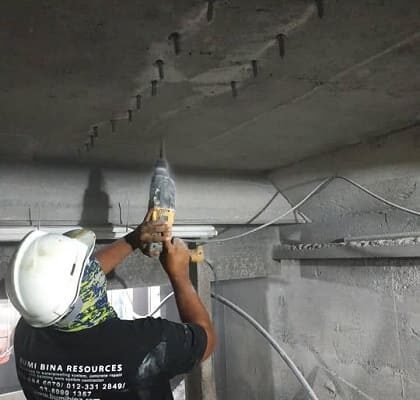
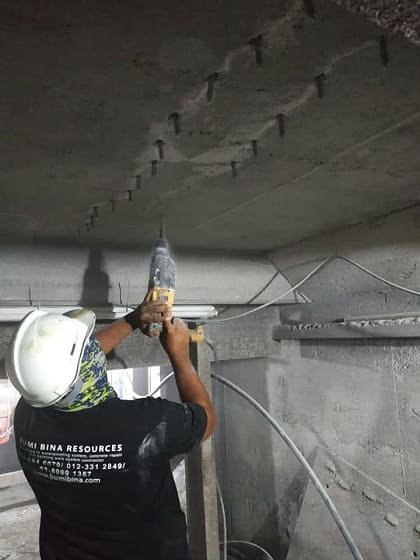
A contractor typically drills injection ports near a leaking crack or joint, installs mechanical or surface-mounted packers and injects resin under controlled pressure.
The resin enters accessible pathways and cures or reacts with water, forming a seal intended to reduce or stop leakage.
The specific behaviour depends on the formulation.
Some polyurethane resins expand into foam, while others form flexible, non-foaming seals.
How Does PU Injection Stop Water Leakage?
The process generally involves:
-
Identifying the leakage pathway.
-
Selecting a compatible polyurethane resin.
-
Installing injection packers.
-
Injecting resin at controlled pressure.
-
Allowing the resin to react or cure.
-
Checking whether leakage has stopped.
-
Sealing injection holes and completing the surface.
Successful injection requires the resin to reach the actual water pathway.
Simply injecting resin into an arbitrary location does not guarantee that a leak will be sealed.
Types of Polyurethane Injection Resin
Polyurethane injection materials differ significantly in their chemical behaviour, flexibility and intended applications.
1. Hydrophilic Polyurethane Injection
Hydrophilic polyurethane grout interacts with water and may form a flexible gel or foam, depending on the formulation.
Certain products are designed to remain flexible and accommodate limited movement.
Potential applications include water-bearing joints and selected concrete leakage pathways.
However, long-term performance can depend on moisture conditions and the specific product.
2. Hydrophobic Polyurethane Injection
Hydrophobic polyurethane grout generally repels water after curing.
Certain hydrophobic systems react with moisture to produce an expanding foam.
These products are often considered for active water leakage where rapid water stopping is required.
The resulting foam’s structure, flexibility and durability depend on the resin formulation.
3. Flexible Polyurethane Resin
Flexible injection resins may be used where the repair needs to accommodate limited movement.
They are not automatically suitable for every moving structural joint.
4. Water-Reactive PU Foam
Water-reactive polyurethane foam expands when it encounters moisture.
Expansion can help the material fill accessible leakage pathways.
Nevertheless, uncontrolled expansion or excessive injection pressure can damage weak substrates, so injection must be carried out carefully.
Hydrophilic vs Hydrophobic PU Injection
| Feature | Hydrophilic PU | Hydrophobic PU |
|---|---|---|
| Relationship with water | Interacts with water | Cured material generally repels water |
| Cured form | Gel or foam, depending on product | Foam or solid resin, depending on product |
| Flexibility | Product-dependent | Product-dependent |
| Typical use | Selected wet cracks and joints | Active leakage and selected crack sealing |
| Moisture requirements | May affect long-term performance | Depends on formulation and curing mechanism |
| Key consideration | Water exposure and material stability | Expansion behaviour and substrate compatibility |
Neither category is universally superior. Resin selection must be based on the actual leakage condition and the manufacturer’s technical data.
Common Applications of Polyurethane Injection Waterproofing
1. Basement Waterproofing
Basements can experience water penetration through concrete walls, floor slabs and construction joints.
PU injection may be used to treat identified leakage pathways where access is available.
2. Retaining Wall Leakage Repair
Retaining walls can develop cracks and leaking joints due to water pressure, movement or construction defects.
Polyurethane injection can be considered for suitable water-bearing defects, although drainage and structural conditions may also need attention.
3. Lift Pit Waterproofing
Lift pits may experience seepage through floor-to-wall junctions, cracks and construction joints.
PU injection is one potential treatment, subject to safe access and appropriate waterproofing design.
4. Concrete Slab Leakage Repair
Concrete roof slabs, podium slabs and other concrete surfaces may leak through cracks or joints.
Injection can be useful for selected defects, but it does not replace a failed waterproofing membrane across a large area.
5. Construction Joint Waterproofing
Construction joints can become leakage pathways when waterstops or other sealing details fail.
Injection may help seal accessible defects, depending on the joint’s movement and water conditions.
6. Underground Structures
Selected tunnels, utility structures and underground facilities may use injection grouting to address localised seepage.
These projects may require specialist engineering, access and safety procedures.
7. Water Tank Leakage Repair
Certain polyurethane injection materials may be suitable for selected tank defects, but potable-water applications require products with the appropriate approvals and compatibility.
A standard PU foam should not automatically be used in drinking-water storage structures.
PU Injection vs Epoxy Injection
Polyurethane and epoxy injection serve different purposes.
| Feature | PU injection | Epoxy injection |
|---|---|---|
| Primary purpose | Sealing suitable water pathways | Bonding suitable stable cracks |
| Reaction with water | Certain products are water-reactive | Many systems require controlled moisture conditions |
| Flexibility | Depends on formulation | Typically relatively rigid |
| Expansion | Some systems expand | Generally non-expanding |
| Active water leakage | Certain systems are suitable | Usually requires separate water control |
| Structural bonding | Ordinary PU water-stop foam is not structural reinforcement | Suitable structural-grade epoxy may restore bonding under specified conditions |
Important: Stopping water leakage is not the same as restoring the structural capacity of damaged concrete.
Where a crack may indicate structural movement or reduced load-bearing capacity, assessment by a qualified structural engineer is necessary.
Benefits of Polyurethane Injection Waterproofing
1. Targeted Leakage Repair
PU injection can treat specific cracks and joints without always requiring the removal of a large waterproofing area.
This is particularly useful when the leaking surface is difficult to access from the water-facing side.
2. Suitable for Certain Active Water Leaks
Water-reactive PU resins can expand when exposed to moisture, making selected products suitable for active water leakage.
3. Reduced Surface Disruption
Compared with removing large areas of concrete or finishes, injection may require relatively small drilling points.
However, accessibility and the actual defect determine how invasive the repair will be.
4. Flexible Material Options
Certain polyurethane resins remain flexible after curing, allowing them to accommodate limited movement.
The degree of movement that can be tolerated must be verified against the selected product’s specifications.
5. Applications in Underground Structures
PU injection can be useful for basement walls, retaining walls and lift pits where excavation may be difficult or expensive.
6. Compatible with Broader Waterproofing Repairs
Injection can be combined with joint sealing, concrete repair, drainage improvements or membrane replacement where required.
Limitations of PU Injection Waterproofing
Although polyurethane injection offers several advantages, it is important to understand its limitations.
-
It may not be suitable for widespread membrane failure.
-
It does not automatically repair leaking plumbing.
-
Some foam systems are intended primarily for temporary water stopping.
-
Water can migrate to another untreated pathway.
-
Poor injection technique can result in incomplete sealing.
-
Excessive pressure can damage weak concrete or joints.
-
Ordinary PU water-stop foam does not restore structural load-bearing capacity.
-
Some applications require additional sealing with non-foaming resin.
Professional PU Injection Waterproofing Process
Step 1: Leakage Inspection
The contractor inspects the affected area to identify the probable water pathway.
Signs may include active dripping, damp patches, water stains and visible cracks.
The inspection should also consider plumbing, drainage and existing waterproofing defects.
Step 2: Assessment of Concrete Condition
The contractor examines the crack location, substrate condition and accessibility.
If the crack indicates possible structural movement or distress, a qualified structural engineer should assess it.
Step 3: Resin Selection
The appropriate polyurethane resin is selected based on water flow, crack conditions, movement and the intended permanence of the repair.
Step 4: Injection Point Preparation
Drilling locations are marked so the packers can intercept the targeted crack or joint.
The spacing and drilling angle depend on the substrate and injection method.
Step 5: Installation of Injection Packers
Mechanical packers or another suitable injection arrangement are installed.
The packers provide controlled access for the resin.
Step 6: Controlled Resin Injection
The contractor uses appropriate injection equipment to deliver resin into the leakage pathway.
Injection pressure, sequence and resin consumption must be monitored.
Excessive pressure should be avoided.
Step 7: Resin Reaction and Curing
The resin reacts or cures according to its formulation.
Water-reactive products may foam and expand, while non-foaming resins can form a flexible seal.
Step 8: Leakage Verification
The repaired area is inspected for continuing water penetration.
Additional injection or a different treatment may be necessary if leakage persists.
Step 9: Packer Removal and Surface Finishing
Injection ports are removed or trimmed as appropriate, and drilling holes are sealed.
The surface is then finished according to project requirements.
PU Injection Waterproofing vs Conventional Waterproofing
| Feature | PU injection waterproofing | Surface waterproofing membrane |
|---|---|---|
| Main function | Seals targeted water pathways | Protects a defined surface area |
| Access | May be performed from accessible side | Generally requires access to installation surface |
| Common applications | Cracks, joints, localised leaks | Roofs, bathrooms, basements and slabs |
| Surface removal | Sometimes limited | May require extensive preparation |
| Treatment area | Localised defects | Continuous waterproofing coverage |
| Limitation | Cannot replace every failed membrane | May not resolve concealed structural leakage without repairs |
These methods can complement one another.
For example, a leaking rooftop may require both crack treatment and replacement of a deteriorated waterproofing membrane.
How Much Does Polyurethane Injection Waterproofing Cost in Malaysia?
The price of PU injection waterproofing in Malaysia depends on the actual leakage conditions and repair requirements.
Unlike standard surface coatings, injection work cannot always be estimated accurately using floor area alone.
| Cost factor | Effect on pricing |
|---|---|
| Number of injection points | Affects drilling, packers and labour |
| Crack length and depth | Influences injection arrangement |
| Resin type | Different formulations have different material costs |
| Water pressure | Can affect resin selection and work complexity |
| Accessibility | Confined or elevated areas may require additional arrangements |
| Concrete condition | Weak or damaged concrete may require separate repairs |
| Injection volume | Actual resin consumption varies |
| Additional waterproofing | Membrane or joint repairs may be necessary |
| Testing and inspection | Depends on project specifications |
Is PU Injection Cheaper Than Waterproofing Membrane Replacement?
For a suitable localised leak, injection may require less surface removal than a complete membrane replacement.
However, it is not necessarily cheaper or more effective for every project.
If a rooftop membrane has failed across a large area, repeated localised injections may not address the underlying problem.
A contractor should compare the repair options after inspecting the site.
Common Reasons PU Injection Repairs Fail
Incorrect Leakage Diagnosis
Water may travel through hidden pathways before appearing on a wall or ceiling.
Treating the visible stain rather than the actual defect can result in unsuccessful repairs.
Unsuitable Resin
A resin selected without considering water flow, movement and environmental conditions may not perform as required.
Poor Packer Positioning
If the injection point does not intercept the leakage pathway, resin may fail to reach the intended area.
Excessive Injection Pressure
High pressure can damage weak concrete, open existing defects or cause uncontrolled resin movement.
Incomplete Resin Penetration
The injected material may not reach all connected leakage pathways.
Ignoring Structural Movement
Active structural movement can cause new cracks or reopen previously treated areas.
Treating Temporary Foam as a Complete Permanent Repair
Some water-reactive foams are intended to stop flowing water before a second, permanent sealing material is injected.
The complete repair procedure must follow the selected manufacturer’s requirements.
Polyurethane Injection Waterproofing in Kuala Lumpur and Selangor
PU injection services may be relevant to residential, commercial and industrial properties across Malaysia.
In Kuala Lumpur and Selangor, common project types include:
-
Basement leakage in commercial buildings
-
Retaining wall seepage
-
Underground car park leakage
-
Lift pit water penetration
-
Concrete slab cracks
-
Construction joint leakage
-
Selected factory and warehouse concrete defects
Relevant locations include Kuala Lumpur, Shah Alam, Klang, Petaling Jaya, Subang Jaya, Puchong, Seri Kembangan, Kajang and Bangi.
The availability of a contractor for a particular site should be confirmed directly.
Bumi Bina – PU Injection Waterproofing Contractor Malaysia
Bumi Bina Resources (M) Sdn. Bhd. is a Malaysian waterproofing and construction company based in Seri Kembangan, Selangor.
The company specifically lists PU Injection / Grouting System among its services and maintains a dedicated page covering polyurethane injection waterproofing.
Its listed service categories also include waterproofing systems, concrete repair and building maintenance.
PU Injection Services to Enquire About
Property owners and facility managers can contact Bumi Bina regarding:
-
Concrete crack leakage
-
Basement water seepage
-
Retaining wall leakage
-
Lift pit waterproofing
-
Construction joint leakage
-
Concrete slab leakage
-
PU injection grouting
-
Related waterproofing and concrete repairs
The appropriate repair method, material and project availability should be confirmed after assessment.
Contact Bumi Bina
Company: Bumi Bina Resources (M) Sdn. Bhd.
Address: 23-1, Jalan PUJ 3/9, Taman Puncak Jalil, 43300 Seri Kembangan, Selangor, Malaysia.
Phone: 012-684 6079 (En. Suhaimi)
Website: https://bumibina.com
For more information about the company’s PU injection services, visit its dedicated page:
PU Injection Waterproofing & Polyurethane Grouting System Malaysia
Need help with concrete leakage? Contact Bumi Bina to discuss the symptoms, location and available repair options.
Call Us Now Your
Polyurethane injection waterproofing Specialist Contractor in Malaysia 012–6846079 (Dato Suhaimi)

Maintenance After Polyurethane Injection Repair
After the injection work is completed, periodic inspection can help identify recurring moisture problems.
Recommended practices include:
-
Monitor the repaired crack or joint.
-
Inspect for new damp patches.
-
Maintain drainage systems.
-
Repair plumbing defects promptly.
-
Avoid drilling into repaired areas without checking their condition.
-
Inspect adjacent construction joints.
-
Record the repair location and materials used.
-
Seek further assessment if leakage returns.
A successful localised injection repair does not eliminate the need to maintain the building’s overall waterproofing and drainage systems.
FAQ: Polyurethane Injection Waterproofing Malaysia
– 1. What is polyurethane injection waterproofing?
It is a method of injecting polyurethane-based resin into suitable cracks, joints or voids to help stop water penetration.
– 2. How does PU injection waterproofing work?
Resin is injected through packers into a targeted leakage pathway. Depending on the formulation, it reacts with water or cures to form a seal.
– 3. How much does PU injection cost in Malaysia?
Costs depend on injection points, resin type, leakage severity, access and repair scope. A site inspection is recommended for accurate pricing.
– 4. Is PU injection suitable for basement leaks?
Yes, selected polyurethane injection systems can treat suitable basement cracks and construction joints. The cause and water pressure must be assessed.
– 5. What is the difference between hydrophilic and hydrophobic PU grout?
Hydrophilic formulations interact with water, while cured hydrophobic formulations generally repel water. Their actual performance depends on the product.
– 6. Can PU injection repair concrete cracks?
PU injection can seal certain leaking cracks, but ordinary water-stopping PU foam does not automatically restore structural strength.
– 7. Is polyurethane injection waterproofing permanent?
Some injection systems are designed for long-term sealing, while certain foaming resins are used for temporary water stopping before additional treatment.
– 8. Can PU injection stop active water leakage?
Certain water-reactive polyurethane products are designed to stop active water penetration in suitable cracks and joints.
– 9. Is PU injection better than epoxy injection?
Neither is universally better. PU is commonly selected for water sealing, while suitable epoxy injection systems may be used for structural bonding of stable cracks.
– 10. Does Bumi Bina provide polyurethane injection waterproofing?
Yes. Bumi Bina lists PU injection and grouting among its waterproofing-related services. Contact the company to confirm the appropriate repair method for your project.
Conclusion
Polyurethane injection waterproofing is a useful technique for treating water penetration through selected concrete cracks, construction joints and voids.
Its ability to deliver resin into concealed leakage pathways makes it particularly relevant to basements, retaining walls, lift pits and other concrete structures where conventional surface waterproofing may be difficult to access.
However, successful PU injection depends on accurate leakage diagnosis, appropriate resin selection, controlled injection and proper verification.
Hydrophilic resins, hydrophobic foams and flexible non-foaming polyurethane systems have different characteristics and applications.
For long-term performance, contractors must also consider structural movement, drainage conditions and whether additional waterproofing repairs are necessary.
Looking for PU injection waterproofing services in Malaysia? Contact Bumi Bina at 012-684 6079 to discuss your concrete leakage problem and suitable repair options.