
Last Updated on September 10, 2026 by Specialist Waterproofing Contractor
Roof Leak Repair Malaysia: Complete Guide to Fixing Roof Leaks and Preventing Water Damage
A leaking roof can start with a small water stain on the ceiling, but the underlying problem may be more serious. Water can enter through damaged roofing materials, cracks, failed joints, old waterproofing systems, roof penetrations or poorly sealed areas. If the leak is ignored, moisture can eventually affect ceilings, walls, insulation and other parts of the building.
For property owners in Malaysia, roof leak repair is particularly important because roofs are exposed to heavy rain, strong sunlight, humidity and changing weather conditions throughout the year.
The right repair method depends on the source and severity of the leak. A simple crack may require localised sealing, while widespread deterioration may require membrane waterproofing or a more comprehensive roof waterproofing system.
This guide explains the common causes of roof leaks, how roof leak repair works, waterproofing options, factors that affect repair costs and how to choose a suitable contractor.
What Is Roof Leak Repair?
Roof leak repair refers to the process of identifying and fixing areas where water enters through a roof or rooftop structure.
The repair may involve different types of work, including:
- Sealing cracks and joints
- Repairing damaged roofing surfaces
- Replacing deteriorated materials
- Repairing roof penetrations
- Applying waterproofing coatings
- Installing waterproofing membranes
- Repairing drainage problems
- Treating concrete cracks
- Using PU injection or grouting for certain leakage problems
The most important step is identifying the actual source of the water intrusion.
A water stain inside a room does not necessarily mean the leak is directly above that location. Water can travel through concrete, joints and other building elements before appearing on the ceiling.
Common Causes of Roof Leaks in Malaysia
There are several reasons why a roof can start leaking.
Damaged Waterproofing
Roof waterproofing systems can deteriorate over time because of weather exposure, movement, ageing and physical damage.
When the waterproofing layer loses its effectiveness, rainwater can penetrate the roof structure.
Cracked Concrete
Concrete roofs and rooftop slabs can develop cracks.
Some cracks may be superficial, while others may require further investigation. Simply applying a new coating over an active or untreated crack may not provide a long-term solution.
Failed Joints and Seals
Joints around roof edges, drains, walls, pipes and other penetrations are common areas where water can enter.
Old sealants can become brittle or detached, creating pathways for water.
Blocked or Poor Drainage
Water should flow towards the appropriate drainage points.
Blocked drains, insufficient falls or damaged drainage systems can cause water to remain on the roof for extended periods.
Damaged Roof Membrane
Membrane waterproofing can become damaged through ageing, mechanical impact or other site conditions.
Once the membrane is compromised, water can potentially enter through the damaged section.
Roof Penetrations
Pipes, vents, air-conditioning equipment and other installations create openings through the roof.
These areas require proper detailing and sealing.
Heavy Rain and Weather Exposure
Malaysia’s frequent heavy rainfall places significant demands on roof waterproofing systems.
A roof with existing weaknesses may only start showing obvious leakage during periods of heavy rain.
Signs That Your Roof Needs Repair
Not every roof leak immediately produces visible dripping water.
Look out for these warning signs:
- Brown or yellow ceiling stains
- Damp patches on walls or ceilings
- Peeling paint
- Bubbling or blistering paint
- Musty smells
- Mould growth
- Cracks around ceiling areas
- Water dripping during rain
- Damp roof surfaces
- Persistent moisture after rainfall
If the problem appears repeatedly after rain, it is worth arranging a roof inspection instead of simply repainting the affected ceiling.
Roof Leak Repair vs Roof Waterproofing
These terms are related but they are not exactly the same.
Roof leak repair focuses on correcting a specific leakage problem.
For example, a contractor may repair a crack, reseal a joint or fix a damaged section.
Roof waterproofing focuses on creating or restoring a protective water-resistant system across a roof or specific area.
Depending on the condition of the roof, a project may require both.
For example, cracks may first need to be repaired before a waterproofing membrane or coating is applied.
Bumi Bina’s waterproofing services include several systems designed for different applications, including roof and rooftop areas. Its listed systems include coating, membrane, cementitious, polyurethane and other waterproofing approaches.
Common Roof Leak Repair Methods
The appropriate method depends on the roof construction, location and cause of the leakage.
Crack Repair
Cracks can be treated using suitable repair materials depending on their characteristics.
For concrete structures, crack repair may involve epoxy injection, polyurethane-based solutions or other appropriate repair techniques.
Bumi Bina lists crack repair among its concrete repair services and notes that epoxy injection or polyurethane foam may be selected depending on the problem.
Waterproofing Coating
Liquid-applied waterproofing coatings can be used on suitable roof surfaces.
One advantage is that a liquid system can form a continuous waterproofing layer when correctly prepared and applied.
The substrate must be properly cleaned and prepared before application.
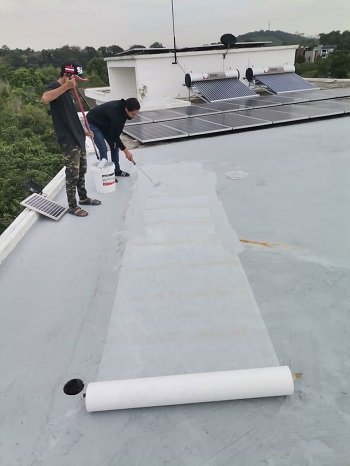
Waterproofing Membrane
Membrane systems provide a dedicated waterproofing layer over the roof.
Depending on the project, options can include modified bituminous membranes, thermoplastic membranes and other membrane systems.
Bumi Bina’s waterproofing information lists several membrane solutions, including self-adhesive modified bituminous membrane, polymer-modified bitumen membrane and thermoplastic membranes such as PVC and TPO.
Polyurethane Waterproofing
Polyurethane membrane systems are another option for suitable roof applications.
Their flexibility can be useful where the waterproofing system needs to accommodate certain levels of movement.
Bumi Bina describes polyurethane membrane systems as suitable for roof waterproofing and notes their flexibility, adhesion and weather resistance.
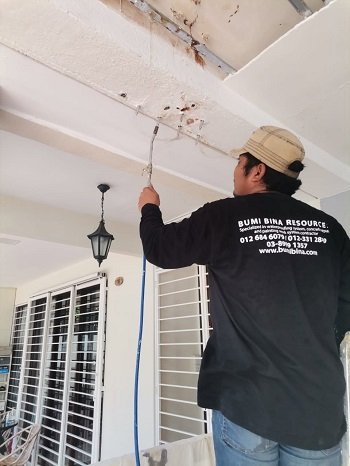
PU Injection
For certain water leakage problems involving cracks, joints or concrete structures, PU injection waterproofing or grouting may be considered.
The material is injected into suitable areas to help seal water pathways.
This type of repair is different from simply applying a coating to the roof surface and is normally selected based on the location and nature of the leakage.
Roof Leak Repair Process
A professional repair should start with an assessment rather than immediately applying waterproofing material.
1. Roof Inspection
The first step is to inspect the roof and affected areas.
The contractor should look for:
- Cracks
- Damaged membranes
- Failed joints
- Ponding water
- Drainage problems
- Roof penetrations
- Surface deterioration
- Previous repair work
2. Identify the Source
The visible ceiling stain is only an indication of a problem.
The contractor needs to determine where the water is entering and how it is travelling through the structure.
3. Select the Repair Method
Once the cause is identified, the appropriate solution can be selected.
This might involve localised repair, sealant, concrete repair, waterproofing coating, membrane installation or injection.
4. Surface Preparation
Surface preparation is critical.
Depending on the system, the roof may need to be cleaned, dried, repaired and prepared before waterproofing is installed.
5. Repair and Waterproofing
The selected repair system is then applied according to the requirements of the roof and material.
6. Inspection and Testing
The repaired area should be inspected to ensure the work has been completed properly.
Where appropriate, additional testing may be carried out to verify waterproofing performance.
Factors That Affect Roof Leak Repair Cost
There is no single fixed price for roof leak repair because every roof has different conditions.
Several factors can affect the overall cost.
Roof Size
A larger roof naturally requires more materials and labour.
Type of Roof
Concrete rooftop slabs, metal roofs, tiled roofs and other roof constructions can require different repair methods.
Severity of Leakage
A small localised leak may require less work than widespread waterproofing failure.
Accessibility
Difficult-to-access roofs may require additional equipment, safety arrangements and labour.
Existing Damage
If the roof has damaged concrete, deteriorated surfaces or failed previous repairs, additional preparation may be required.
Waterproofing System
The selected coating, membrane or waterproofing system can affect the project cost.
Drainage Repairs
Blocked, damaged or poorly designed drainage may need to be addressed as part of the repair.
For this reason, homeowners should request a site inspection and detailed quotation instead of choosing a contractor based solely on the lowest advertised price.
Should You Repair or Replace the Roof?
This depends on the condition of the existing roof.
Repair may be suitable when the main problem is localised and the underlying roof remains in reasonable condition.
More extensive work may be appropriate when there is widespread deterioration, repeated leakage or a severely damaged waterproofing system.
A professional assessment can help determine whether a localised repair, re-waterproofing project or more extensive roof work is appropriate.
How to Prevent Future Roof Leaks
Roof maintenance can help identify problems before they become major leaks.
Keep Roof Drains Clear
Leaves, dirt and debris should not be allowed to accumulate around drainage points.
Inspect Roof Joints
Check areas around walls, drains, pipes and other penetrations.
Look for Early Cracks
Small cracks should be assessed rather than ignored.
Check Previous Repairs
Old patch repairs and sealants should be inspected periodically, particularly if leakage returns.
Maintain Waterproofing
Waterproofing systems should be inspected when there are signs of deterioration or after significant building works.
Common Mistakes When Fixing Roof Leaks
Only Repainting the Ceiling
Painting can hide a stain temporarily, but it does not solve the source of the water.
Applying Waterproofing Without Surface Preparation
Even a suitable waterproofing product can perform poorly if the substrate has not been properly prepared.
Repairing Only the Visible Leak
Water can enter from another location and travel before becoming visible.
Ignoring Drainage
A waterproof roof can still experience problems if water continuously ponds because of poor drainage.
Choosing a Product Without Understanding the Roof
Different roof materials and conditions require different waterproofing approaches.
Waiting Until the Leak Becomes Severe
Small signs of water intrusion should be investigated early.
How to Choose a Roof Leak Repair Contractor
Choosing the right contractor is important because waterproofing quality depends not only on the product but also on surface preparation, detailing and installation.
Before appointing a contractor, consider:
- Relevant roof repair experience
- Waterproofing experience
- Ability to conduct site inspection
- Clear explanation of the leakage problem
- Detailed scope of work
- Suitable material recommendations
- Written quotation
- Workmanship information
- Previous project experience
- Proper safety procedures
Ask the contractor to explain why a particular repair system is being recommended.
A good quotation should make it clear what preparation, repair, waterproofing and finishing work are included.
Why Professional Roof Leak Repair Matters
Roof leakage can affect more than the roof itself.
Persistent moisture can eventually contribute to:
- Damaged ceiling finishes
- Peeling paint
- Mould growth
- Damp walls
- Deterioration of building materials
- Damage to interior finishes
- Unpleasant odours
The earlier the source is identified, the easier it may be to determine an appropriate repair strategy.
For larger buildings, commercial properties or roofs with complicated waterproofing problems, a contractor experienced in waterproofing and concrete repair can be particularly useful.
Bumi Bina provides waterproofing, concrete repair and PU injection/grouting services, with applications listed for roofs, rooftops, concrete structures and other areas exposed to water intrusion.
Roof Leak Repair for Residential and Commercial Buildings
Roof leakage is not limited to landed houses.
Similar problems can occur in:
- Terrace houses
- Semi-detached houses
- Bungalows
- Apartments
- Commercial buildings
- Offices
- Factories
- Warehouses
- Industrial facilities
The repair strategy may vary significantly depending on the building type.
For example, a concrete rooftop on a commercial building may require a different waterproofing approach from a tiled residential roof.
This is why the contractor should inspect the actual roof rather than recommending a generic solution.
When Should You Call a Contractor?
Contact a professional when:
- Water is entering the building during rain
- Ceiling stains keep returning
- Multiple areas are affected
- The roof has visible cracks
- Waterproofing has failed
- Water is ponding on the roof
- Previous repairs have not solved the problem
- The roof is difficult or unsafe to access
Avoid walking onto a wet or unstable roof simply to investigate the leak yourself.
Conclusion
Roof leak repair should focus on finding the actual source of water intrusion rather than simply covering visible stains.
The right solution may involve crack repair, joint sealing, waterproofing coating, membrane installation, concrete repair, drainage improvement or PU injection, depending on the condition of the roof.
For Malaysian properties, choosing a suitable waterproofing system is particularly important because roofs are exposed to heavy rain, humidity, heat and long-term weather conditions.
Before starting work, arrange a proper inspection, understand the cause of the leakage and request a detailed quotation. A good contractor should be able to explain the proposed repair method, materials, preparation work and scope clearly.
Bumi Bina offers waterproofing, concrete repair, PU injection/grouting and related building services that can be relevant to roof leakage and waterproofing projects. Call Us Now Your Best Roof Leak Repair Specialist Contractor in Malaysia 012–6846079 (Dato Suhaimi)

FAQ
- What is roof leak repair?
Roof leak repair is the process of identifying and fixing areas where water enters through a roof or rooftop structure. The solution can include crack repair, sealing, waterproofing, membrane installation or other repair methods. - What causes roof leaks in Malaysia?
Common causes include damaged waterproofing, cracked concrete, failed joints, blocked drainage, damaged roof membranes, roof penetrations and deterioration caused by long-term weather exposure. - Can a roof leak be fixed without replacing the entire roof?
Yes. If the damage is localised and the underlying roof remains in good condition, a suitable repair or re-waterproofing system may be sufficient. - Is roof waterproofing the same as roof leak repair?
Not exactly. Roof leak repair focuses on fixing the source of a leak, while waterproofing is used to create or restore a protective barrier against water. Some projects require both. - How do I know where my roof is leaking?
A ceiling stain can indicate water intrusion but may not show the exact entry point. Professional inspection can help trace the source. - What is the best waterproofing system for a roof?
There is no single system that is best for every roof. The suitable option depends on the roof material, condition, exposure, drainage and type of leakage. - Can PU injection be used for roof leaks?
PU injection or grouting can be considered for certain leakage conditions involving cracks, joints or concrete structures. Its suitability depends on the actual cause and location of the leak. - How much does roof leak repair cost in Malaysia?
The cost varies according to roof size, accessibility, damage severity, materials, waterproofing system and required preparation work. A site inspection and detailed quotation are recommended. - Should I repair a roof leak immediately?
It is advisable to investigate persistent leakage early. Ignoring water intrusion can allow moisture-related damage to develop in ceilings, walls and other building components. - How can I prevent roof leaks from happening again?
Regular roof inspections, keeping drains clear, maintaining waterproofing, checking joints and repairing cracks or damaged areas early can help reduce the risk of recurring leaks.