
Last Updated on September 3, 2026 by Specialist Waterproofing Contractor
Specialist Waterproofing Contractor Malaysia: Complete Guide to Professional Waterproofing Solutions
Water leakage, water seepage and damp surfaces can cause more than just an unpleasant appearance. If left untreated, moisture can contribute to concrete deterioration, damaged finishes, mould growth and recurring maintenance problems. This is why choosing a specialist waterproofing contractor is important when a building requires a proper and long-term waterproofing solution.
A specialist waterproofing contractor assesses the source and location of water ingress before selecting an appropriate system. Depending on the structure and exposure, solutions may include waterproof coatings, membranes, cementitious systems, epoxy, PU injection, grouting, sealants or spray-applied systems.
For Malaysian properties, waterproofing is particularly relevant to areas exposed to heavy rainfall, humidity and frequent wet conditions. Bathrooms, balconies, rooftops, water tanks, basements, retaining walls, swimming pools and underground structures all require suitable waterproofing strategies.
Bumi Bina provides waterproofing-related services including waterproofing systems, PU injection and grouting, concrete repair, polyurea spray coating and other building-related solutions. Its website also identifies applications covering toilets, bathrooms, kitchens, terraces, balconies, water tanks, reservoirs, underground structures, foundations, retaining walls, lift pits, swimming pools and rooftops.
What Does Specialist Waterproofing Mean?
Specialist waterproofing refers to professional waterproofing work designed to prevent water from entering or damaging a building structure.
Unlike simply applying a waterproof paint over a visible leak, specialist waterproofing normally starts by understanding where the water is coming from, how it is entering the structure and what type of substrate or construction detail is involved.
The appropriate solution can then be selected based on factors such as:
- Type of building structure
- Location of the leakage
- Existing waterproofing condition
- Concrete or substrate condition
- Water pressure
- Exposure to rain and weather
- Movement or cracks in the structure
- Accessibility of the affected area
- Required durability and maintenance considerations
This approach is important because the visible location of a water stain isn’t necessarily the actual entry point of the water.
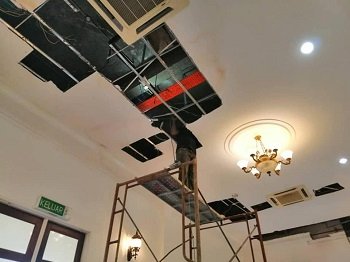
For example, water appearing on a ceiling could originate from a roof, balcony, bathroom, plumbing area or another location above the affected surface.
Why Is Professional Waterproofing Important in Malaysia?
Malaysia’s tropical climate creates challenging conditions for building structures. Frequent rainfall, high humidity and wet conditions can expose vulnerable areas to water ingress.
Poor or deteriorated waterproofing can lead to problems such as:
Water Seepage
Water can migrate through cracks, joints, porous concrete and other weak points. Over time, seepage can become more noticeable and affect internal finishes.
Damp Walls and Ceilings
Persistent moisture may result in damp patches, peeling paint, staining and deterioration of surface finishes.
Concrete Deterioration
Water penetration can contribute to deterioration of concrete and may become a more serious maintenance concern when combined with other factors.
Recurring Leakage
A temporary repair may stop visible water for a short period without addressing the underlying waterproofing failure. When the next heavy rainfall arrives, the leakage can return.
A specialist approach focuses on identifying the actual problem instead of treating only the visible symptom.
Common Waterproofing Services and Systems
There isn’t one waterproofing system that is suitable for every building. Different locations require different approaches.
Bumi Bina lists several waterproofing technologies, including coating, membrane, paint, spray, cementitious and epoxy systems. It also provides PU injection and grouting solutions.
Waterproof Coating
Waterproof coatings can be applied to suitable surfaces to create a protective barrier against moisture and water penetration.
The appropriate coating depends on the substrate, exposure conditions and intended application.
Waterproof Membrane
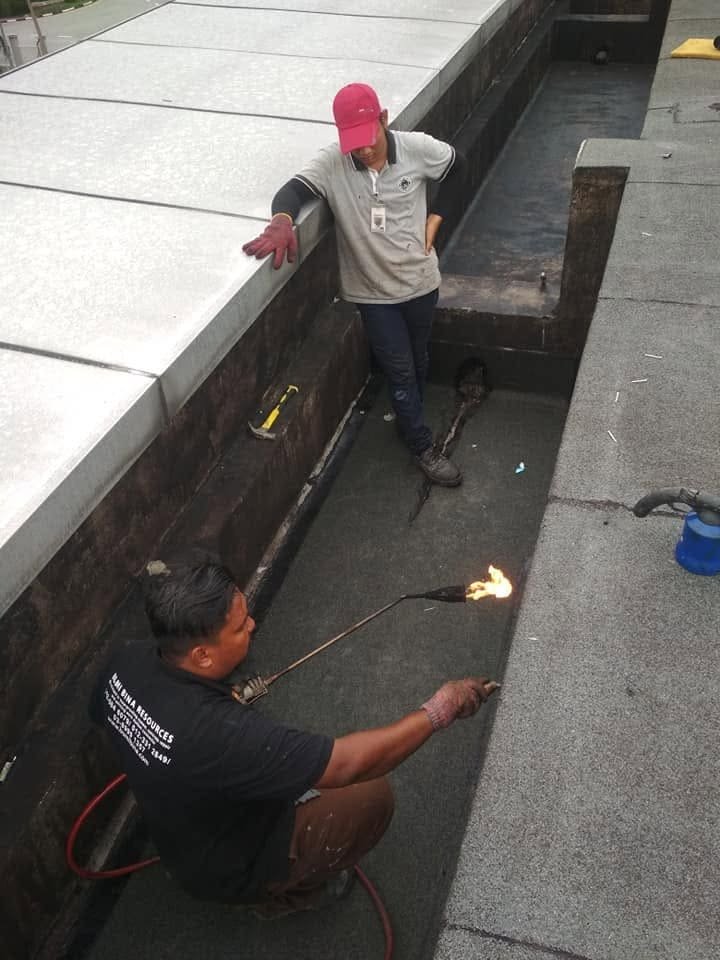
Membrane systems create a continuous waterproofing layer over a prepared surface.
They can be considered for applications where a dedicated waterproofing layer is required, although the correct membrane and installation method depend on the project.
Cementitious Waterproofing
Cementitious waterproofing systems are commonly associated with concrete and wet-area applications.
They can be useful in locations where compatibility with a mineral or concrete substrate is an important consideration.
Epoxy Waterproofing and Protection
Epoxy-based systems can provide protective properties and may be used for specific construction and flooring applications.
However, the suitability of epoxy depends on the substrate and environmental conditions.
PU Injection and Grouting
PU, or polyurethane, injection is particularly relevant when dealing with water entering through cracks, joints or specific points in concrete structures.
Bumi Bina specifically lists PU Injection / Grouting System as one of its services.
Polyurea Spray Coating
Polyurea is a spray-applied coating technology that can be considered for selected waterproofing and protective applications.
Bumi Bina lists Polyurea spray coating among its services.
The choice between polyurea, membrane, coating, cementitious waterproofing or injection should be based on the project rather than simply selecting the most expensive or newest technology.
Which Areas Need Specialist Waterproofing?
Waterproofing can be required in many parts of a building.
Bumi Bina identifies several areas for its waterproofing-related services, including bathrooms, kitchens, terraces, balconies, water tanks, reservoirs, underground structures, foundations, retaining walls, lift pits, swimming pools, wet areas, roofs and rooftops.
Roof and Rooftop Waterproofing
Roofs are directly exposed to rain and weather. Cracks, deteriorated waterproofing layers, joints and drainage problems can contribute to leakage.
A roof waterproofing solution should therefore consider the existing roof condition, drainage and areas where water may accumulate.
Bathroom Waterproofing
Bathrooms are continuously exposed to water. Waterproofing is particularly important around floors, walls, shower areas and other wet zones.
If water is already appearing in the room below a bathroom, simply repainting the ceiling downstairs may not solve the problem.
Balcony and Terrace Waterproofing
Balconies and terraces can experience rain exposure and standing water. Cracks, joints, drainage points and deteriorated waterproofing layers can become potential leakage paths.
Basement and Underground Structures
Underground structures can face water pressure from surrounding soil. Waterproofing requirements can therefore differ significantly from a simple bathroom or balcony application.
Water Tanks and Reservoirs
Water-retaining structures require waterproofing systems appropriate for their specific use and exposure.
Retaining Walls
Retaining walls can be exposed to moisture from surrounding soil. Waterproofing and appropriate drainage considerations may be important depending on the construction.
Lift Pits
Lift pits are another area where water ingress can create operational and maintenance concerns. Bumi Bina lists lift pit base and wall applications within its comprehensive waterproofing services.
How Does a Specialist Waterproofing Process Work?
A professional waterproofing project should be based on the actual condition of the building.
A typical process can involve several stages.
1. Identify the Water Problem
The first step is understanding where the water is appearing and under what conditions.
Useful information includes whether leakage occurs during heavy rain, continuously, after bathroom use or when water accumulates on a particular surface.
2. Inspect the Affected Structure
The affected area should be examined for visible cracks, damaged surfaces, failed waterproofing layers, joints and other potential entry points.
3. Determine the Appropriate Waterproofing Method
The waterproofing system should match the problem.
For example, a crack requiring injection may need a different treatment from a large exposed rooftop requiring membrane or coating protection.
4. Prepare the Surface
Surface preparation is an important part of waterproofing work.
Dust, loose materials, deteriorated concrete, contaminants and unsuitable existing coatings may affect the performance of the waterproofing system.
5. Apply the Selected System
The selected waterproofing material or system is then installed according to its intended application.
6. Inspect and Test the Work
Where appropriate, the completed waterproofing should be inspected or tested before the area is returned to normal use.
The exact procedure depends on the location and waterproofing system.
How Much Does Specialist Waterproofing Cost?
There is no single price for specialist waterproofing because project requirements vary considerably.
A quotation can depend on:
- Size of the affected area
- Type of waterproofing system
- Condition of the existing substrate
- Extent of concrete repair required
- Accessibility
- Height or location of the work
- Surface preparation
- Number of waterproofing layers
- Required protective finishes
- Whether leakage investigation or injection is required
- Existing waterproofing that needs to be removed
For this reason, comparing contractors based solely on the cheapest quotation can be misleading.
A better approach is to compare the scope of work, proposed waterproofing system, surface preparation, repair requirements and workmanship.
If two quotations use completely different systems or include different preparation work, their prices aren’t necessarily directly comparable.
Specialist Waterproofing vs Temporary Leak Repair
One of the most important distinctions for property owners is between repairing a visible leak and resolving the waterproofing problem.
A temporary repair may address a small visible area. Specialist waterproofing looks at the wider water-entry problem.
For instance, sealing a visible crack could reduce water penetration at that location. But if water is entering through surrounding failed waterproofing, another leak may eventually appear elsewhere.
This doesn’t mean every leak requires a major waterproofing project. Minor problems can sometimes have relatively straightforward solutions.
The key is to identify the cause before deciding on the repair method.
How to Choose a Specialist Waterproofing Contractor in Malaysia
When comparing waterproofing contractors, consider more than marketing claims.
Look at the Actual Services
Check whether the contractor handles the type of problem affecting your building.
A contractor working mainly on bathroom waterproofing may not necessarily be the right choice for a large underground structure or industrial application.
Ask About the Proposed System
A professional quotation should provide enough information for you to understand what is being proposed.
Questions worth asking include:
- What waterproofing system is recommended?
- Why is this system suitable?
- What surface preparation is required?
- Does concrete repair need to be completed first?
- How will existing leakage be addressed?
- What areas are included in the quotation?
Understand the Scope of Work
Make sure you know what the quoted work actually includes.
A low initial price can become less attractive if important preparation or repair work is excluded.
Consider the Building’s Condition
If cracks, damaged concrete or other structural defects are present, waterproofing alone may not be enough.
Bumi Bina also provides concrete repair services and injection-related systems, which can be relevant when waterproofing problems involve concrete defects.
Common Waterproofing Mistakes to Avoid
Treating Only the Visible Water Stain
The stain may be far away from the actual water-entry point.
Applying Waterproof Paint Without Proper Preparation
A coating cannot compensate for every substrate problem. Surface condition and preparation affect the result.
Ignoring Cracks
Cracks can become pathways for water penetration. Their treatment should be considered as part of the overall solution.
Choosing a System Based Only on Price
The cheapest system isn’t automatically the most suitable.
Ignoring Drainage
Even good waterproofing can face unnecessary stress if water continuously pools because of inadequate drainage or incorrect falls.
Delaying Repairs
Small signs of seepage shouldn’t automatically be treated as a major emergency, but persistent leakage is worth investigating before deterioration becomes more extensive.
Why Bumi Bina Is Relevant for Waterproofing Projects
Bumi Bina Resources describes itself as a Malaysian waterproofing and construction renovation company and states that it was registered in May 2011. Its listed areas of expertise include concrete repair services, waterproofing systems, painting, industrial flooring, renovation and general civil building works.
For waterproofing specifically, Bumi Bina lists multiple systems and related services, including coating, membrane, paint, spray, cementitious and epoxy waterproofing, as well as PU injection and grouting.
Its stated application areas include residential and building wet areas as well as more demanding locations such as underground structures, foundations, retaining walls, lift pits, water tanks, reservoirs and rooftops.
This combination is useful when a waterproofing problem also involves concrete defects, injection work or other building maintenance requirements.
What Information Should You Give a Waterproofing Contractor?
Before requesting a quotation, prepare as much useful information as possible.
You can provide:
- Location of the leakage
- Photos of affected areas
- Photos of cracks or damaged surfaces
- Approximate size of the affected area
- Whether the problem occurs only during rain
- Whether the problem is continuous
- Age or condition of the affected structure
- Previous waterproofing or repair work
- Any known plumbing issues
Good information helps a contractor understand the problem before assessing the site.
For complex leakage, an on-site inspection may still be necessary because photographs cannot always reveal the actual water-entry path.
Frequently Asked Questions About Specialist Waterproofing
Is specialist waterproofing necessary for every water leak?
No. Some leaks can have relatively simple causes, while others require a dedicated waterproofing system. The correct approach depends on the source, location and condition of the structure.
What is the best waterproofing system?
There is no universal “best” system. Membrane, coating, cementitious, epoxy, PU injection and polyurea systems each have different applications. The correct system should be selected according to the substrate, exposure and leakage problem.
Can waterproofing stop existing water leakage?
It can, provided the source of water ingress is correctly identified and the selected repair method is suitable. Simply covering a visible stain doesn’t necessarily resolve the underlying problem.
Is PU injection suitable for concrete leakage?
PU injection can be suitable for certain cracks, joints and water-ingress conditions in concrete. The appropriate injection material and method depend on the actual defect.
Does a leaking roof always need to be completely replaced?
Not necessarily. Depending on the roof’s condition, repair or re-waterproofing may be possible. A proper assessment should determine whether the existing system can be repaired or requires more extensive work.
How do I choose a waterproofing contractor in Malaysia?
Compare contractors based on relevant experience, proposed waterproofing system, scope of work, preparation requirements, repair methodology and quotation details rather than price alone.
Can waterproofing be applied to old concrete?
Yes, waterproofing systems can be used on existing concrete in many situations. However, the concrete condition and surface preparation need to be assessed first.
When should I contact a waterproofing specialist?
If leakage is recurring, spreading, appearing after rainfall or accompanied by dampness and concrete deterioration, getting the problem assessed is a sensible step before carrying out repeated temporary repairs.
Conclusion
A specialist waterproofing contractor does more than apply a waterproof coating. The important part of a successful waterproofing project is understanding the source of water ingress, assessing the condition of the structure and selecting a system appropriate for the application.
For Malaysian buildings, potential waterproofing requirements can range from bathrooms and balconies to rooftops, water tanks, retaining walls, lift pits and underground structures. Different problems may require different approaches, including membranes, coatings, cementitious systems, epoxy, PU injection, grouting or polyurea spray coating.
If your property has recurring water seepage, roof leakage, damp concrete or another waterproofing concern, the next practical step is to have the affected area assessed and determine which waterproofing solution is appropriate for the structure.
FAQ:
- What does specialist waterproofing mean?
It refers to professional waterproofing work that assesses water ingress and applies a suitable system to protect a building or structure from moisture and leakage. - What waterproofing services are available?
Common solutions include membranes, coatings, cementitious waterproofing, epoxy systems, PU injection, grouting and spray-applied systems. - Where can waterproofing be applied?
Typical applications include roofs, bathrooms, balconies, terraces, water tanks, reservoirs, underground structures, foundations, retaining walls, lift pits and swimming pools. - What causes water seepage?
Possible causes include cracks, failed waterproofing, joints, porous concrete, poor drainage and water entering from adjacent or higher areas. - How much does waterproofing cost in Malaysia?
Costs vary according to the area, waterproofing system, surface condition, accessibility, preparation and repair requirements. A site-specific quotation is more useful than a generic price. - Can PU injection repair concrete water leakage?
PU injection can be appropriate for certain cracks and water-ingress points in concrete, depending on the defect and site conditions. - Is waterproof coating enough to stop a leak?
Not always. If the substrate, cracks, drainage or underlying waterproofing failure isn’t addressed, a surface coating alone may not solve the problem. - How can I find a suitable waterproofing contractor?
Look for a contractor offering the appropriate waterproofing technology for your building and compare the proposed methodology, preparation, scope and quotation.
Bumi Bina offers a range of waterproofing and related construction services, including waterproofing systems, PU injection and grouting, concrete repair and polyurea spray coating. Call Us Now Your Specialist Waterproofing Contractor Malaysia 012–6846079 (En Suhaimi)
